by Publisher | Mar 3, 2012 | News Coverage, TV Coverage
Every year thousands of Floridians suffer traumatic brain injuries. Many of the injured are high school athletes, who get back in the game after suffering a concussion. Legislation would take the decision to keep playing out of the hands of players and coaches and make doctors decide.
Tallahassee, FL — February 29, 2012 —
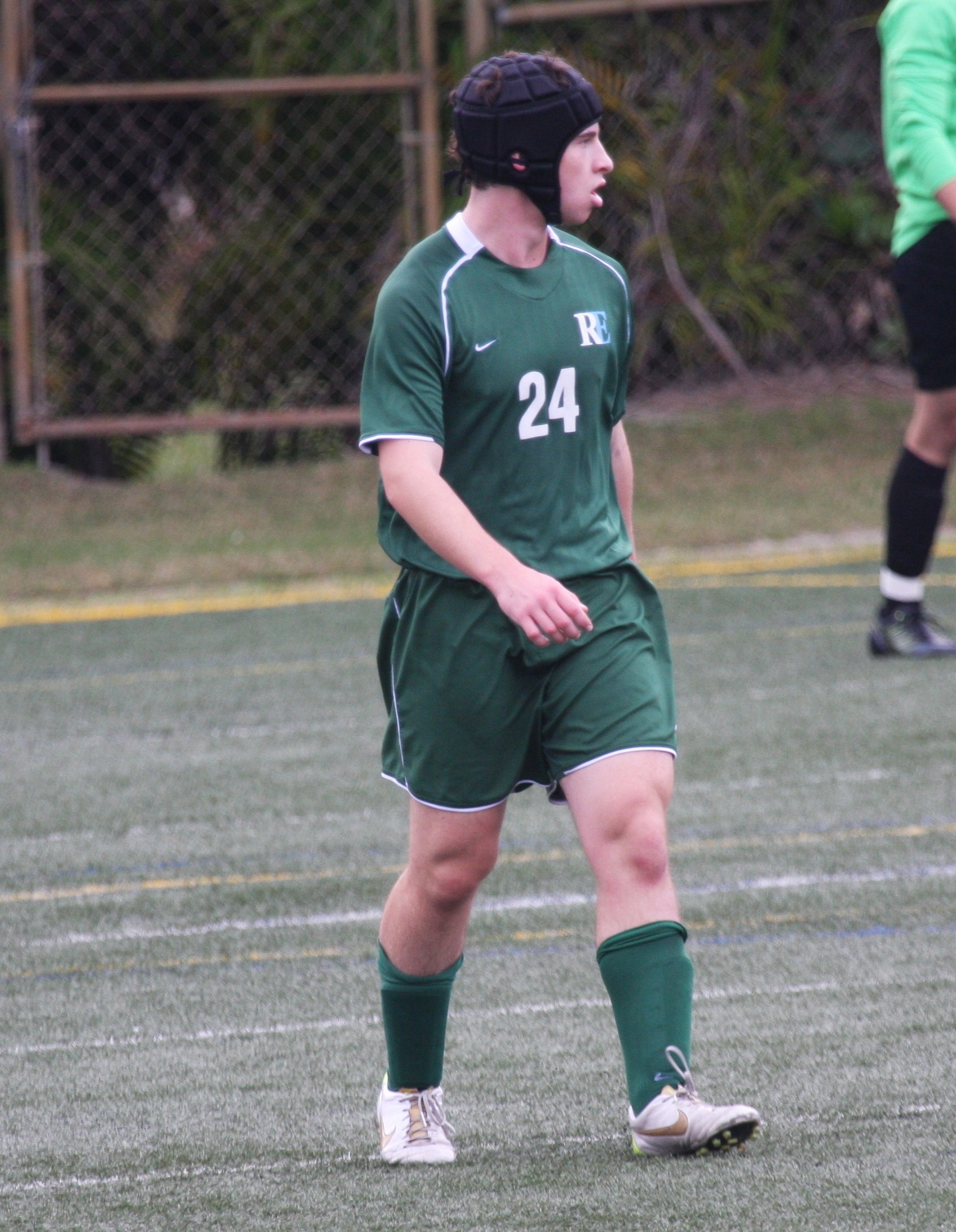
High school junior David Goldstein’s new game is politics. David suffered a concussion during a championship soccer game, and played through his injury.
“We were losing two nothing and I figured I need do everything I can for my team,” said David.
It was a dangerous decision.
“For over three months after my collision, I was sensitive to light and sound, my balance was distorted. I was depressed,” said David.
Athletes who keep playing after suffering a concussion risk brain injury or even death, but in the past it was expected; even applauded. Coaches would perform an on field test. A right answer got the player back in the game. There’s just one huge problem; most coaches aren’t doctors.
“For too long we have said you know what, shake it off, you’re fine, it’s just a bump on the head, go on and get back in the game,” said Flores.
State Senator Anitere Flores is sponsoring a bill requiring medical professionals to decide if an injured athlete can keep playing.
“It has to be someone trained in the management of concussion,” said Flores.
As for David, he’s back on the soccer field “There are bigger things than one game,” he said, and better equipped to protect his health.
The Florida High School Athletic Association has already adopted rules to protect players who’ve suffered concussions. A spokesman for the FHSAA says the legislation will help solidify their new rules.
by Publisher | Mar 1, 2012 | News Coverage, Print Coverage
TAMPA —
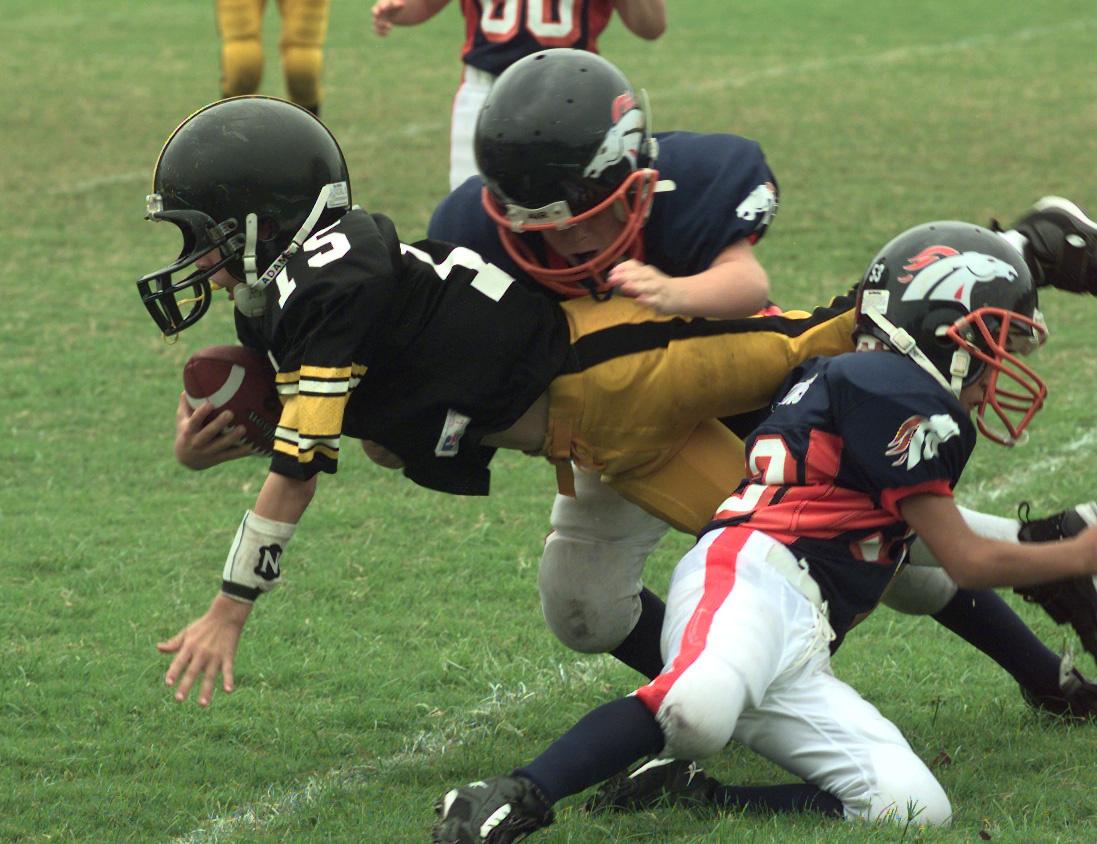
Youth sports leagues could be the latest group required to educate parents, players and coaches about head injuries and concussions.
Legislators in Florida’s House and Senate could vote this week on bills mandating new training for coaches and increased consent from the parents of young athletes, said sponsor Rep. Ronald “Doc” Renuart, R-Ponte Vedra Beach.
The law would apply rules that were implemented last year for the state’s high school sports programs to other youth sports clubs, such as the Florida Youth Soccer Association and Pop Warner football leagues.
“I think in these club sports, it’s more aggressive and there’s probability of injury,” said Cheryl Goldstein, a Miami mother whose son, David, suffered several concussions over the years while playing high school and club soccer. The teen, now 17, and his parents are lobbying legislators for the law.
Renuart knows some parents, coaches and athletes are skeptical about the rule, which is designed to give a child’s developing brain time to heal properly. But the pressure to get back in a game is secondary to a child’s health, he said.
“We want to … protect Johnny from his own parents or coach,” he said. “Sometimes we have to protect them from themselves.”
Sports-related concussions have been a growing issue for several years. Sports teams, from the peewee level to the National Football League, have been reacting to growing evidence that untreated concussions can cause lasting consequences. If passed, Florida will join 34 other states that have youth concussion policies.
Diana Brett of Davie says the bill can save lives. Her son, Daniel, was a high school freshman football player when he experienced a series of concussions during practice. He didn’t tell his coaches or parents about the injuries for weeks.
For 20 months, Brett said the family tried to treat Daniel’s dizziness, mood swings and migraines, but were unfamiliar with the sensitive nature of treating head injuries. The cumulative damage, and the loss of his dream to play college football, resulted in Daniel’s decision to commit suicide almost a year ago, Brett said. He was 16.
“We don’t want another family to go through the absolute hell we went through,” she said.
The Florida High School Athletic Association policy created a protocol for athletes suspected of having concussion-like symptoms. They are removed from play or practice, and not allowed to return without a doctor’s assessment and approval, which could be days or weeks later. Coaches also are required to watch a 20-minute concussion awareness video.
It’s not clear how similar the requirements are for the dozens of independent youth sports clubs across Florida. One of the largest, the Florida Youth Soccer Association, boasts a membership of more than 100,000 in its recreational and competitive clubs for boys and girls.
The soccer association does include general concussion education resources on its website, but it’s not clear if training is mandatory for coaches. A checklist for assessing concussions also is posted on the website, and includes a recommendation that athletes stay away from play for 24 hours after an injury. Officials did not respond to repeated calls for clarification about the rules.
An estimated 40,000 public and private high school coaches in Florida this school year have seen the training video, said Gary Pigott, Florida High School Athletic Association senior director of athletics. It helps them identify concussion symptoms, and reaffirms the importance of pulling the athlete out of the competition.
“There’s definitely more caution any time a concussion or suspected concussion is sustained,” Pigott said. “Two years ago if somebody hit their head, it was check them out and send them back in.”
Hillsborough County high schools implemented many of these concussion policies before the FHSAA, said Lanness Robinson, the district athletics director. Parent consent forms mention the risks associated to head injuries, and coaches viewed similar concussion education videos.
The local and high school association policies are working in part because they don’t place a financial burden on schools, Robinson said. If youth leagues have the proper infrastructure, implementing these rules can be uneventful, he said.
Renuart and Sen. Anitere Flores, R-Miami, unsuccessfully introduced the bills in 2011. The sticking point involved the practitioners authorized to clear a student athlete to play again. The FHSAA rule and the 2011 bill had designated that role for medical doctors or doctors of osteopathic medicine only.
Renuart, who is an osteopathic physician, said trainers and others may be qualified to identify a concussion. The return-to-play decision, however, needs to be left to people more familiar with a youth’s treatment and recovery.
“They know who is best qualified to make that decision,” he said, adding that last year’s opposition from the chiropractic industry has been dropped.
By MARY SHEDDEN | The Tampa Tribune
Published: February 19, 2012
by Publisher | Mar 1, 2012 | News Coverage, Print Coverage
THE ASSOCIATED PRESS
TALLAHASSEE, Fla. — The National Football League and former Miami Dolphins star Nat Moore are calling on the Florida Senate to pass legislation that would require high school athletes to have medical clearance before they could return to competition after suffering a concussion.
The measure would also require coaches to remove any player from competition if there is suspicion the athlete has suffered a concussion. The legislation also has the backing of the Florida High School Athletic Association.
More than 30 states already have laws in place with restrictions on high school athletes who have suffered concussions. A bill to establish the legislation in Florida failed last year, but has unanimously passed the House this session and awaits Senate approval before going on to Gov. Rick Scott.
by Publisher | Feb 29, 2012 | News Coverage, Print Coverage
TALLAHASSEE, Fla. — Every year an estimated 140,000 high school athletes suffer concussions nationwide and too many of them are returning to play before they have recovered.
The Florida Legislature is moving to put tougher restrictions in place to prevent youth athletes from going back to their sport too soon because that can set them up for long-term brain troubles.
High school junior David Goldstein, who suffered three concussions playing soccer, is speaking in support of the bill along with the NFL and the Florida High School Athletic Association.
Goldstein sustained a serious concussion in a soccer game and he felt the effects for months: headaches, nausea, fatigue and depression. He returned to play too soon because he didn’t know any better, but now understands that was a big mistake.
“Even though I’d previously suffered two concussions I kept playing after my most recent concussion because I did not know the potentially devastating consequences of a second impact to my head. Second impact syndrome and multiple concussions can lead to permanent brain damage or even death.”
House bill sponsor Rep. Ronald Renuart, who’s also a doctor, says the human brain does not fully develop until people reach their late 20’s. He says injuries during the developmental years can impact a youth’s mood, social development and intelligence, and can limit someone’s potential.
He says for too long the issue of brain injuries has been treated too cavalierly.
“In the past, you’d get your bell rung, they’d drag you to the sidelines, they’d want to count some random fingers and you’re back in the game. Few realized how critical that situation was. Concussions, especially repeat concussions, can cause severe brain damage and in some cases can lead to death.”
The bill would require coaches to take an athlete out of a game or practice immediately following a head injury. The player could not return to competition until getting clearance from a doctor. The legislation would also apply to organized youth athletics at government-owned parks.
Parents and athletes would have to sign an informed consent form before they could play a sport.
“What this does is it informs our parents, it makes our youth sports safe again. Right now and for too long we have had that syndrome where you just say, ‘Shake it off. You’re fine. It’s just a bump on the head. Go ahead and get back in the game.’ Those days have to be over.”
The same bill died in the chaotic end to last year’s legislative session. Former Miami Dolphins receiver Nat Moore, now a V.P. with the Dolphins, is calling on lawmakers to finish the job this year.
“This legislation will help raise awareness and protect young athletes form the risk of concussions and other preventative brain injuries. For the kids’ sake, I urge lawmakers in this Senate to pass this legislation now and send it to the governor’s desk. We all know that the state of Florida is in the forefront of athletics and to not protect our resources is crazy.”
The Florida House has already passed the bill, but it’s waiting for final action in the Senate. Currently 31 states have passed similar laws that are intended to reduce concussions among youth athletes.
Written by: Dave Heller
by Publisher | Aug 18, 2011 | Print Coverage
Natasha Helmick goes up for a header during a Dallas soccer match and gets speared in the left temple by an opponent. The 14-year-old, a talented center midfielder playing in the choice Lake Highlands Girls Classic League, crumples to the ground.
She can’t see anything out of her left eye. Her coach asks if she’s OK. Natasha lies and says she’s good to go, and the coach puts her back into the lineup. She plays the remainder of the game, even though one eye sees darkness, while floaters and sparkly objects dance in front of the other.
She plays again later that day, without full eyesight. Her vision will eventually return, but five years and four concussions later, Natasha Helmick is unable to recall much of her childhood.
Speaking to her, you wouldn’t know that Natasha, who was forced to give up an athletic scholarship to Texas State University-San Marcos, is a brain-damaged 19-year-old. “But academically,” says her mother, Micky Helmick, “everything is three times harder.”
While Natasha racked up more concussions, David Goldstein, a “little freshman” by his own estimation, shouldn’t have even been on the soccer pitch during the January 2010 district finals for Ransom Everglades when the Miami prep school played against longtime rival Gulliver. But after an older kid was injured, David subbed in. He was playing one of the best games of his life when he collided head-to-head with an opponent he describes as “a monster from Gulliver.”
Game tape shows David holding his head and swaying like a drunk. But there was no way he was going to take himself out of this match, and his coach didn’t either.
It was — though David didn’t understand the medical ramifications at the time — his third concussion in four years. After the game, he felt nauseated and cowed by light, stumbling to his dad’s car and collapsing.
For months, the “blaring” headache persisted. “It’s always there,” he describes. “It’s so intense, it takes over your life.” Previously a devoted student, David took refuge in the school nurse’s office three hours a day, closing his eyes to the painful light. He became agitated and impatient with friends. Every specialist his parents took him to was perplexed by his condition.
Across the country, people have awakened to the sometimes irreversible damage of concussions, especially in high-impact professional sports. With much of the attention focused on the National Football and National Hockey leagues, Village Voice Media — following a months-long, nationwide investigation into the consequences of concussion on youth athletes, who are larger and more aggressive than in past generations, and often play year-round — has found the following:
• The effect of a concussion on kids can be much more devastating than on adults. Doctors say that until a person is in his early to mid-20s, his brain is not fully developed and can’t take the same level of trauma as an adult brain can.
• Postmortem analysis, the only surefire way to measure concussions’ devastating effects, shows that repeated blows to the head might be linked with Alzheimer’s, Parkinson’s, ALS, and a number of other fatal diseases.
• An athlete who doesn’t exhibit outward signs of a concussion (headaches, dizziness, vomiting, temporary amnesia) can still experience changes in brain activity similar to those in a player who has been clinically diagnosed with a concussion.
• Thus far in 2011, 20 state governments and the District of Columbia have signed concussion legislation that prohibits an athlete from returning to play until cleared by a licensed physician. To date, 28 states (as well as the city of Chicago) have concussion laws in place. This does not include Florida; here, legislators struck down a proposed bill that could have helped protect youth athletes.
• The ImPACT test, widely regarded as the go-to neurological exam to measure concussive blows, doesn’t always accurately gauge a player’s readiness to return to action. And you can cheat on it.
Meanwhile, as attorneys debate how the new concussion laws will play out, young people such as Natasha Helmick, whose memory struggles sometimes resemble those of an elderly person, continue to battle a condition that puts parents who want the best for their children in an interesting position: Would they push to have them be standouts in athletics — sometimes the key to a better future — if they realized that in some cases their kids can be harmed for life by their participation in elite sports?
For Ali Champness, it was a freak ball kicked into her face by her own goalie in practice that turned her life upside down. The 14-year-old freshman, who’d already made junior varsity at Garces Memorial, a Catholic high school in Bakersfield, California, told her parents the sting went away after a little while.
Two days later, though, on the way to a game, recalls her mother, Kim Champness, Ali complained of a headache and dizziness.
During play, the ball was kicked in the air and “brushed across the front of [Ali’s] face,” Kim says. “It was not a hard hit at all, but right after that, she started stuttering.” Ali saw a doctor, who discovered a number of much more serious problems.
In the past, a “bell ringer” was thought of the same way as a cut or a sprained ankle, with no lasting side effects. Until a few years ago, the NFL’s medical committee on concussions published studies that concluded players were not suffering long-term damage from head trauma incurred during athletic competition.
The lack of awareness carried over to the training rooms of every sport, and high-profile athletes such as boxer Muhammad Ali and All-Pro safety Dave Duerson were prematurely sent back into action. Years later, they essentially lost their minds.
The Centers for Disease Control and Prevention estimates that as many as 3.8 million sports- and recreation-related concussions occur each year. Out of this figure, about 235,000 persons are hospitalized and 50,000 die per annum, according to the CDC.
“Ninety percent of concussions went undiagnosed,” Chris Nowinski of the Boston-based Sports Legacy Institute tells Village Voice Media. “In fact, today you can talk to an athlete and ask the amount of concussions they’ve had and give them the actual definition, and that number will increase.”
Nowinski, a former World Wrestling Entertainment pro and author of Head Games: Football’s Concussion Crisis, along with noted neurosurgeon Dr. Robert Cantu, founded the Sports Legacy Institute. The foundation works with Boston University’s Center for the Study of Traumatic Encephalopathy in performing postdeath pathology on brains donated by former athletes.
One of the latest specimens examined was that of Duerson, a former NFL standout who, following years of dementia and depression, fatally shot himself — in the chest so his brain would be preserved — this past February 17. Neurologists later confirmed that Duerson, who had played for three NFL teams, was afflicted with chronic traumatic encephalopathy (CTE), a neurodegenerative disease linked to the total amount of distress a brain receives during a lifetime. Because a concussed person might not always exhibit classic symptoms such as headaches and nausea, CTE can cause the brain of a 35-year-old to resemble that of an 80-year-old.
These findings have helped turn the NFL from concussion skeptic into an organization that is spreading the word that head trauma in sports can have deadly consequences. The campaign has even trickled down to the NFL-licensed Madden NFL videogames, in which a concussed player in the yet-to-be-released Madden NFL 12 cannot return to play after suffering the injury. In February, the league urged all states to pass concussion legislation in youth athletics.
For the 75 former NFL pros who sued the league in July, alleging it concealed the dangers of the injuries for decades, it’s too little, too late. Football retirees such as Mark Duper, Ottis Anderson, and Raymond Clayborn claim the league was careless in its false assumptions. As of press time, the NFL planned to contest the allegations.
The proper treatment of concussions, especially in youth sports, is still a developing — and somewhat murky — science.
In 2004, Jake Snakenberg, a Denver-area high school freshman, knocked his head during a football game but assured his mother he felt ready to play again. A week later, the young fullback once again hit his head during a game. The blow was unremarkable, but Jake staggered to his feet and then collapsed. He never got back up. The next day, he was declared dead from second-impact syndrome, a swelling of the brain derived from a second concussion before the symptoms of the first have passed.
These types of injuries are exacerbated in youth athletes because the human brain doesn’t metabolically or neurochemically mature until a person is in his or her early to mid-20s, according to David Hovda, professor and director of the Brain Injury Research Center at the University of California-Los Angeles. This includes the young brain of Matt Blea, who nearly died on a California football field two years ago.
On Thanksgiving Day 2009, Matt, a 16-year-old junior and starting running back for San Jose High, tried to retrieve an underthrown ball during the opening possession of the 66th annual Big Bone rivalry against Lincoln High. Despite his modest five-foot-five, 140-pound frame, Matt was the recipient of all-league honors as well as props from an opposing linebacker, who once told him: “I don’t know how you ran me over, because you’re so little.”
As Matt jumped for the errant pass, a Lincoln High safety cleanly and legally put his shoulder into Matt’s midsection. Because Matt was unable to brace himself, his head whacked San Jose City College Stadium’s artificial turf.
“I knew instantly something was wrong,” says his father and former San Jose High defensive coordinator Dave Blea, who stood on the sidelines. “I couldn’t see his pupils. I could only see the whites of his eyes.”
Out of sight of the referees, who signaled play to continue as normal, Matt crawled to the sidelines and lost consciousness. After paramedics tried unsuccessfully to revive him, Matt was rushed to Santa Clara Valley Medical Center for emergency brain surgery.
“They didn’t think he was going to make it,” Dave says. “They thought that he had suffered so much brain damage that he probably would have been mentally disabled.”
Matt remained comatose for ten days and spent nearly a month in intensive care owing to complications from second-impact syndrome. His first concussion, suffered three weeks before on the penultimate play of a game, was not detected, even after Dave took Matt to a doctor when he told his father that his vision was blurry.
“One thing that still hurts is that I always told my kids that if they suffered a concussion, I would keep them out the whole year,” Matt’s father says. “He passed all of his neurological tests. I guess he was misdiagnosed.”
Matt suffered another setback when the surgical incision became infected, requiring another procedure to remove a piece of his skull. For the next 42 days, Matt was forced to wear a helmet and take a chemotherapy-like cocktail of antibiotics.
“I don’t remember much at the hospital,” says Matt, who was paralyzed on the right side of his body for more than a month. “I remember people holding me up while I tried to take my first step, but my body felt like there was nothing there, like a ghost.”
To the surprise of the physicians, Matt eventually recovered. Soon the high school graduate will attend De Anza College in Cupertino, California, to study for a career in physical therapy, a profession he never considered before his injury. His first choice was to become a paramedic, but he’s been told that’s impossible — his right eye remains half-blind.
Dr. Mark Ashley — cofounder, president, and CEO of the Centre for Neuro Skills, whose clinics in Bakersfield, California, and Irving, Texas, specialize in traumatic brain injury rehabilitation — is helping Ali Champness recover from a number of serious health issues spawned by the not-too-dramatic hits from a soccer ball in January.
Ali, on Ashley’s advice, sat out the rest of the soccer season. Two months later, she joined the school’s swim team. But three weeks in, Ali called her mom from a competitive meet in a panic. “Mom, you need to get me to a doctor,” Kim Champness remembers her daughter saying.
At Ashley’s center, an MRI and CAT scan revealed bleeding in Ali’s brain. A cardiologist found that the initial concussion had deregulated Ali’s autonomic nervous system. For months, whenever Ali jogged on the treadmill, her heartbeat soared high enough to trigger cardiac arrest or stroke. She still goes to rehab three hours a day.
One of Ashley’s most severe cases, treated at his center’s Texas facility in 2006, was a 13-year-old football player from the Seattle suburbs named Zackery Lystedt, called “Ray Ray” for his idol, rampaging linebacker Ray Lewis.
In the second quarter of a game, Zack fell after an unremarkable tackle and hit the back of his head, although the injury escaped the notice of his father in the stands. “I thought he had gotten the wind knocked out of him,” Victor Lystedt recalls.
Zack played every down for the rest of the game, even forcing a fumble and sprinting to a 32-yard return. But when his dad met him after the game, Zack began stumbling and muttering, “My head hurts really bad.”
He collapsed onto the field. His left eye suddenly “blew out” and turned an inky black, the result of blood swelling in his skull. Then he convulsed into dozens of strokes. Says Victor, who witnessed the spectacle, helpless and confused: “My boy was dying on a football field.” His son would survive, but his serious health problems continue.
Concussive episodes in youths have led school districts en masse to adopt new procedures for dealing with blows to the head. The most popular is the ImPACT test. A simple computer program designed by a pair of Pittsburgh doctors in the early ’90s, the exam finds an athlete’s “baseline” — his mental aptitude and quickness of reflexes when he’s not suffering concussive symptoms — which can be used later in a comparative test to see if a collision has caused a lag.
But the test has hit real-world snags. The first is its price: At packages costing roughly $600 per school for the first year, ImPACT is deemed too expensive for some districts. And even when they spring for the program, few schools can afford to pay a specialist to administer it. That duty tends to fall on coaches or trainers, who are often unqualified to conduct the test. As shown in a litigious case in the suburbs of New York City, the results can be tragic.
In 2008, Ryne Dougherty, a 16-year-old high school linebacker in Essex County, New Jersey, sat out three weeks following a concussion. But after taking an ImPACT test, he was cleared to play. During his first game back, he suffered a brain hemorrhage and slipped into a coma. Ryne died within a week.
But Ryne’s ImPACT results were ominously low, the family has claimed in a lawsuit against the school district. Additionally, according to the test results, Ryne reported feeling “foggy,” but he was still cleared to play.
“Fogginess is the lead predictor of lasting head trauma,” says Beth Baldinger, the attorney representing Ryne’s family in a suit against the district. “[The trainer] ignored the test results in front of her. This case screams ignorance.”
Michele Chemidlin, the trainer who administered the test, ignored phone messages and an email requesting comment for this story. She claimed to Sports Illustrated that Ryne’s test was interrupted by a “disruptive” teammate, which made the results “invalid.” But Baldinger claims the trainer retracted that story in a recent deposition.
“She testified that she never even bothered to see Ryne’s test results,” says the attorney. “It was one of the most brutal depositions I’ve ever been involved in. She left the room crying several times.”
Kenneth Podell, a Detroit neuropsychologist and one of the creators of ImPACT, declined to comment specifically on Dougherty’s case. But he says that “in ideal circumstances,” the test should be administered not by a trainer but by a medical professional.
“It’s better than nothing,” UCLA’s Hovda says of ImPACT. “I don’t mean any disrespect, but neuropsychological tests, which require responses and performance from individuals, are always going to have problems because there’s always going to be variances.”
One of those variances is that an athlete can cheat the system. In April, Indianapolis Colts quarterback Peyton Manning flippantly admitted he intentionally performs poorly on baseline exams. When and if he takes postconcussion tests, the results won’t look as bad, which means he (or anyone else who employs a similar baseline-test strategy) might be able to return to play immediately. NFL Commissioner Roger Goodell later fessed up that concussion-test cheating is an issue the league needs to address.
Complicating head-trauma detection is a recently released Purdue University study that concludes that youth athletes who aren’t clinically diagnosed with a concussion are still experiencing fundamental brain changes that might be detrimental.
For two seasons, three Purdue professors tracked every practice and game hit sustained by 21 Lafayette Jefferson High School (Indiana) football players. “That’s when we started to see that about half of the kids had some level of easily measurable neurophysiological change without any concussion whatsoever,” says Purdue’s Eric Nauman.
“What we think is probably happening is that since these kids don’t have any symptoms, nobody ever takes them out of the game or makes them sit. They probably keep racking up more and more hits, and it tends to affect more and more of the brain.”
Nauman and his colleagues are looking for funding so they can study soccer players, wrestlers, and participants in activities that aren’t usually thought of as dangerous. “Anecdotally, the cheerleaders at Purdue had almost as many concussions as the football players,” Nauman says.
“No bill is better than a bad bill,” says state Sen. Dennis Jones, a working chiropractor who helped kill a concussion law in Florida this past May. “As chiropractors, we’ve been treating head injuries since 1931. The symptoms of a concussion are not that difficult to diagnose.”
Florida is one of the only states to balk at concussion legislation for youth athletes, a nationwide trend that started in 2009 when Washington gave a thumbsup to the Zackery Lystedt Law. A prototype for dozens to come, the act requires any athlete under 18 who suffers a suspected concussion to receive written consent from a medical professional before returning to play. There is no similar federal law.
In Texas, Natasha’s Law, named for former soccer player Natasha Helmick, was signed by Gov. Rick Perry in June after the Senate passed the bill by a 31-0 margin. Beginning January 1, 2012, Colorado’s Jake Snakenberg Act will take the Lystedt Law one step further by requiring every coach in youth athletics to complete an online concussion recognition course.
Florida, however, recoiled from its own version of concussion safety because Jones, a Republican from Seminole, was miffed that the language did not include chiropractors among “medical professionals.”
On the Senate floor, Jones argued that standard MRIs can be used to detect concussions, which is a fallacy. Jones filed an amendment to include chiropractors, but the House refused to vote on the amended bill.
David Goldstein, the Miami high school soccer player, testified in favor of the bill in Tallahassee. After suffering three concussions, David had been told by doctors to “wait it out, never play soccer again, and good luck.” It wasn’t until he visited the University of Miami — one of the nation’s top medical centers for head trauma in student athletes — that David’s injury wasn’t treated as some unfathomable affliction. The doctors slowly worked him back to the point where he could return to soccer wearing a rugby helmet. Now 16, he’s a starter on varsity.
Last year, David organized a raffle at school and wrote letters asking for cash until he had raised $35,000, which will be donated to the Miami-Dade school district. It will pay for three to four years of concussion tests for every public school in the county.
As more states enact concussion laws, medical professionals, athletic trainers, and school administrators are wondering if these laws will help prevent a condition that’s inherently difficult to detect.
In Arizona, on the strength of Gov. Jan Brewer’s signature on House Bill 1521, the Mayo Clinic offers free online concussion tests to more than 100,000 high school athletes. In June, the Mayo Clinic issued a news release stating the Arizona Interscholastic Association had endorsed the baseline test, which was not true and caused an AIA attorney to threaten legal action. The two have since made up and are partnering to test all Arizona contact athletes during the 2011-12 school year, beginning with football.
Steve Hogen, athletic director of Mesa Public Schools, had concerns with Arizona’s law even before it passed. According to him, if he and his cohorts hadn’t been vocal about the bill’s language (which was consequently amended), the law would have placed an impossible load on them.
“It put the burden on us that we had to make sure that all Pop Warner football kids were tested. That’s impossible. We can’t do that,” Hogen says. “What if an out-of-state group had come in and they didn’t have this concussion testing? We wouldn’t have had the resources to check.”
Because a legal precedent has yet to be established on these new laws, attorneys are divided on how potential lawsuits will play out in a courtroom.
Steven Pachman is a Philadelphia-based lawyer who has advised numerous academic institutions and athletic entities about concussion litigation. Though Pachman declines to comment about specific clients, a records search shows he defended La Salle University in a lawsuit filed by the family of a former player. Preston Plevretes claimed he had received severe brain damage because the school’s nurse and a team trainer inserted him back into play too soon following a concussion. (La Salle settled out of court for $7.5 million.)
Pachman explains he receives a call every week from advice-seeking youths and high school sports organizations. “What I’m hearing from the defense perspective — ‘We don’t have a plan’ and ‘An athletic trainer is too expensive’ — frightens me,” he says.
Before concussion laws came into vogue, the parents of Zackery Lystedt of Seattle filed suit on their son’s behalf. Airlifted to a Seattle emergency room on life support, Zackery had the top of his head completely removed by surgeons. He wasn’t supposed to regain consciousness.
The milestones that have come since then have been both miraculous and frustratingly slow. Nine months later, Zackery resumed speaking. By 13 months, he moved his left arm. After 20 months, he could once again eat. Now, five years later, 18-year-old Zack can walk a few steps with a cane. “You get a little bit back, you want a little bit more,” Victor Lystedt says of his son’s progress. “You never get satisfied, because you had it all before.”
Zack’s parents, whose lives have been completely altered as they have cared full-time for their son, sued the school district for allowing him to play through his injury. The district settled, and one of its lawyers shrugged off the payout as a “business decision.”
That still offends his father. “Shame on those lawyers,” Victor says. “They can all rot in Hell as far as I’m concerned. There’s nothing ‘business’ about my kid.”
Born and raised in Santa Ana, California, Karoline “Kari” Krumpholz was destined for water polo greatness. Her father, Kurt Krumpholz, a three-time All-American selection in men’s water polo, was inducted into UCLA’s hall of fame in 2008, the same year that Kari’s brother J.W. won an Olympic silver medal with the U.S. water polo team.
As a sophomore at Foothill High School, Kari and her water polo team won the 2007 California Southern Section Division I championship. Following a star-studded career that included numerous athletic honors, she accepted a scholarship to UCLA.
During a UCLA practice in February, Kari was defending “one of the strongest girls on the team” when she was clocked between the eyes by her teammate’s elbow. Kari thought her nose was broken, but upon further examination, a student trainer said she was fine. As a precaution, the trainer made her skip the rest of practice.
However, Kari wasn’t doing so well the next day. “I went to class and I knew something was wrong. I couldn’t focus and I felt out of my body. I am a really good student, so for that to happen, I knew something wasn’t right.”
That day, a doctor diagnosed her with a concussion. Five months later, after nearly daily visits to various UCLA physicians as well as Orange County’s Migraine & Headache Center, she’s still experiencing symptoms.
To Kari’s knowledge, this is the first concussion she has received. “But since I’ve been having so many problems, one doctor said that it’s possible that I had undiagnosed concussions in the past,” she says.
If and when her symptoms clear, Kari, a sophomore majoring in psychology, sounds doubtful she’ll return to the water.
“It would be scary for me to play again because my brain is really important to me and I have plans for graduate school,” she says. “Once I am cleared, I’m going to have to really examine if I’m willing to take that risk.”
For those who decide to stick it out, they might be playing a game that could be significantly altered in the future. Arizona, for example, has considered eliminating kickoffs from high school football because of the dangers inherent when players collide with one another at top speeds.
Other organizations are relying on updated helmet technologies to try to prevent concussions. Although it’s impossible to completely prevent head trauma in football, helmet manufacturer Riddell has, in the past 20 years, redesigned and released several types of helmets.
While parents, coaches, and athletes try to find the proper balance between athletic participation and long-term health, Natasha Helmick, who’s studying at Texas State University to be an athletic trainer, is still experiencing depression and focus issues.
Natasha says she still hasn’t moved past the disappointment of that day when Texas State decided to pull her athletic scholarship. “My doctor told me that I should never play a contact sport again in my life. He said, ‘Don’t even go out and shoot with friends. That’s how endangered your head is.'”
Natasha’s 16-year-old brother Zachary plays club select soccer and has “moved up the soccer ladder faster than Natasha did,” says their mother Micky. This summer, Zachary participated in the U.S. Youth Soccer Olympic Development Program. If he keeps performing well, he could be handpicked from a pool of athletes to represent the country in national and international competition. However, like his older sister, he has suffered multiple concussions. Micky, mindful of her son’s dream as well as his long-term health, says it will be a “difficult decision” to pull Zachary from soccer if he receives another head injury.
“He’s aggressive out there. He plays a lot like [Natasha]. It’s very scary for me,” Micky says.
After Natasha’s initial testimony in front of the House of Representatives in Austin, she and her parents sat in a rotunda with former football players Robert Jones and N.D. Kalu. Jones won three Super Bowl rings as a linebacker with the Dallas Cowboys, and Kalu played ball at Rice University before embarking on a 12-year career with the Philadelphia Eagles, Washington Redskins, and Houston Texans.
As the Helmicks chitchatted with the men, they noticed something just wasn’t right mentally with these hulking athletes who had suffered countless concussions during their playing careers.
“When we left there for the day,” Micky says, “Natasha turned to me and said, ‘Mom, I could really tell. I hope I’m not that way when I’m their age.'”
by Publisher | Aug 16, 2011 | Print Coverage
High school senior Michael Espinel, a defensive player for Belen Jesuit Preparatory’s football team, has suffered three concussions in two seasons.
In November 2009, Belen was practicing for the state championship semi-finals. Michael received a blow to the head during a drill, momentarily numbing half of his body.
“I felt like I was in a dark room, with a light shining in my face. My head hurt so badly,” said Espinel, then a sophomore.
He returned to the practice field anyway, and five minutes later he collapsed, unconscious.
Two pivotal new measures being rolled out in South Florida are intended to prevent scenarios like that.
The Florida High School Athletics Association (FHSAA), which governs high school sports throughout the state, is implementing new guidelines to keep athletes suspected of sustaining a concussion from returning to the field without a doctor’s OK.
In addition, high school students who play on interscholastic teams in Miami-Dade and Broward counties will take a baseline cognitive test in the pre-season to determine the extent of a concussion and monitor their recovery should they suffer a head injury.
Both changes are aimed at keeping injured players off the field until fully recovered, helping to prevent the cumulative effects of multiple concussions.
“Injuries on the brain, especially the ones that go untreated at a young age, have a much greater impact on society than we’ve been previously willing to admit,” said Dr. Kester Nedd, director of Neurological Rehabilitation at the University of Miami’s Sports Medicine Center.
“Beyond headaches and dizziness, any traumatic brain injury can potentially affect personality and interpersonal relationships.”
One such long-term consequence is Chronic Traumatic Encephalopathy (CTE), a degenerative brain disease, according to Dr. Ann McKee, head neuropathologist of a brain bank at the Bedford Veterans Administration Medical Center in Massachusetts.
“Multiple injuries on top of previously untreated injuries – that’s where the danger builds up,” McKee said.
Assessing a concussion’s severity and determining proper treatment can be difficult. When a kid takes a bump to the head, finer cognitive functions such as memory are usually the first to go and the last to come back, Nedd said.
The test being phased in for Miami-Dade high school athletes — called Immediate Post-Concussion Assessment and Cognitive Testing (ImPACT) — takes 30 minutes and is administered online. Test takers perform a series of tasks that measure cognitive functions such as memory recall, attention span, non-verbal problem solving and reaction time.
Once an athlete is suspected of suffering a concussion, an ImPACT retest is administered, and scores are compared. Along with a neurological exam, the results can aid a doctor in determining whether an athlete is fit to return to the playing field.
Nedd and his colleague Dr. Gillian Hotz, who run The Miami Project to Cure Paralysis Concussion Clinic at the University of Miami, have been pushing for years to have high school athletes tested.
The cost to individual schools — estimated at $600 annually — had stood in the way, but David Goldstein, an incoming junior at Ransom Everglades School in Coconut Grove, helped change that.
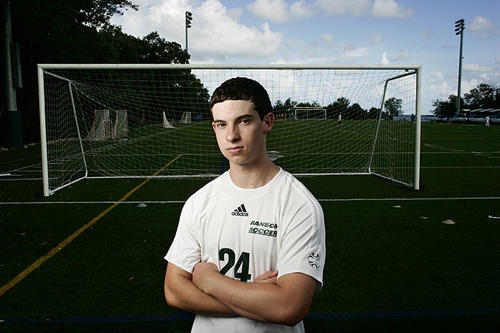
Goldstein, a soccer player, suffered his third concussion in four years in January 2010 in a head-to-head collision during district finals. He stayed in the game – and spent the next three months with incapacitating headaches and a loss of balance.
“After the hit, I finished the game and practiced the next day. Even me, who had had two concussions already, I wasn’t properly educated. I thought maybe I had a cold. It wasn’t until I collapsed from pain after practice the next day that I realized something was wrong,” Goldstein said.
After seeing several doctors and being told he could never again play soccer, Goldstein was referred to Hotz and Nedd. They put him on the road to rehabilitation after discovering that he had suffered inner ear damage.
They also introduced him to ImPACT testing, which Goldstein brought to the attention of the athletic director at his school, Claude Grubair.
Ransom adopted ImPACT testing for its athletes, and Goldstein decided to bring baseline testing to Miami-Dade public schools. He founded the Countywide Concussion Care project, which has raised $35,000.
The money has gone to the KiDZ Neuroscience Center at the Miami Project to Cure Paralysis at the University of Miami’s Sports Medicine Center, where Hotz has purchased tests in bulk for schools to administer.
Hotz and Nedd will also be responsible for clearing all athletes to play post-injury.
“I will not clear a kid over the Internet; they’ll have to come in. ImPACT will help, but we need to see them,” said Hotz.
All Miami-Dade high school athletes eligible to play spring football were tested in May, and testing is being expanded to volleyball players, soccer, wrestling, basketball, softball and lacrosse. About 2,800 students have been tested so far.
“We eventually want to expand to other sports, but crunch time right now is focused on contact sports,” said Cheryl Golden, instructional supervisor for Miami-Dade Schools.
Broward County schools are implementing mandatory ImPACT testing for high school football players countywide next year.
“This was an automatic call for me with concussions and return to play being such a hot button issue,” said Damian Huttenhoff, director of Athletics and Activities for Broward schools.
A University of Pittsburgh grant is paying for a year’s worth of tests, and injured athletes will be followed by doctors at Nova Southeastern University. Once the grant runs out, the county will pay for ImPACT.
With an estimated 15,000 athletes in Broward, Huttenhoff said, the county can’t yet guarantee that testing will be available to athletes in all contact sports, but “the ultimate goal is to have 100 percent tested.”
In addition to requiring that players with suspected head injuries be taken off the field immediately and not returned without medical clearance, the FHSAA is requiring that all coaches receive additional concussion management and recognition training.
“We need smarter parents, coaches and athletes,” said Valerie Breen, director of the Brain Injury Association of Florida. “Long-term change is going to require a change in the sports culture.”
For its part, Belen, a private school, began baseline testing of its football players this summer. For some time, the school has offered all previously concussed players helmets designed to protect against concussive hits.
Once he is cleared by Dr. Nedd, Espinel plans to finish out the season with his team. But he’s decided against trying to play college ball.
Read more: http://www.miamiherald.com/2011/08/16/v-fullstory/2356508/schools-implement-new-rules-to.html#ixzz1VJWvCja7