by Publisher | Jun 9, 2011 | Print Coverage
Pop quiz.
You’re a legislator, and you’ve got a chance to vote on a bill that would protect kids from deadly brain injuries at no additional cost to the state.
If passed, the bill would make sure that student athletes who might have concussions get checked out by a doctor before returning to play.That way, so goes the bill’s logic, kids won’t suffer from the outcome of untreated concussions, which include depression, diminished intelligence — even suicide.
The bill would also make sure that parents sign a waiver showing that they understand the serious health risks associated with concussions, so that suspected cases get diagnosed and properly treated. Also, the state-sanctioned athletic associations would be supportive of the bill, even agreeing to voluntarily enact the anti-concussion policies. So, all things considered, would you support that measure, the Youth Athletes bill?
As you’ve probably come to expect with Sunshine State politics, the answer isn’t the simple “yes” that it should be.
In late April, Rep. Ronald “Doc” Renuart (R-Ponte Vedra Beach) pitched this basic idea to the state House of Representatives — and it passed unanimously. When it got to the state Senate, however, an amendment process began which would hamstring the bill’s progress until its eventual death.
What this means: The next chance to protect student athletes really won’t come up again until the next legislative session — in January.
The bill’s failure has not been widely discussed, so the Pulp decided to figure out what exactly happened.
Here’s what went down. When the bill hit the Senate floor, Sen. Dennis Jones (R-Seminole) — who is a chiropractor — had added an amendment that would also allow chiropractors to make the call whether a student can return to a game. This version of the bill passed, but had to get another OK from the House before making its way to the governor for final approval — because of the last-minute amendment.
Meanwhile, the legislative session was quickly drawing to a close.
The result, according to Renuart: “By the time we tried to make some compromising language, the session went out.”
Renuart, an osteopathic physician and military reservist who recently served as a field surgeon in Iraq, told the Pulp that chiropractors would have been included in the House’s amended version. He said that involved parties — parents, athletes, coaches — could “consult with a chiropractor,” but that a physician still needed to be present to give the player a clean bill of health.
Renuart said that he doesn’t intend to shaft chiropractors. He just thinks that chiropractors don’t have the “experience and training to treat internal brain injuries” and shouldn’t have the final say.
“This was politically motivated,” he said. “The chiropractor would rather see the bill die than not see chiropractors able to do this.”
Jones disagrees.
“The House sponsor was unwilling to accept amendments to make this a fair bill, so as a result, the bill died,” he told the Pulp.
Chiropractors, Jones said, are often better versed in dealing with brain trauma than “a gastroenterologist or a dermatologist that maybe 10 years ago did their hospital rounds.”
Jones counters, in fact, that people with possible concussions should “go to the chiropractors first because we are the ones who see the most head injuries other than an E.R. doctor.”
Rep. Steven Perman (D-Boca Raton), who is also a chiropractor but did vote for the bill, said that he was “disappointed” and “frankly offended” on behalf of chiropractors.
“At the end of it, I said ‘wow,'” he told the Pulp. “There’s important things in this bill, and at the end of the day, we want the athletes to be safe. I thought that it was appropriate, despite my misgivings, to take the high road and support the bill.”
Renuart said that he might reintroduce the bill. Jones said that he’s thinking of submitting a similar measure.
“I could file one in the Senate just as easy, and I’d consider doing that,” he said.
by Publisher | May 10, 2011 | Research
Concussions used to be thought of as simple injuries. The end of symptoms, such as dizziness and headaches, usually meant a person had fully recovered. Nowhere was this view more prevalent than in sports, where common practice dictated that players could quickly return to the field once the dizziness ended. Now researchers are learning that sports-related concussions are very complicated injuries and that even the mildest ones may cause hidden, long-lasting problems.
“Symptom resolution is not necessarily injury resolution,” said Seymon Slobounov, Ph.D., the Director of the Psychophysiology of Movement Laboratory at Penn State University in University Park, PA.
Recently, Dr. Slobounov and his team reported the most conclusive evidence to date that an athlete’s brain may remain injured even after the symptoms of a recent concussion have disappeared and that these putative injuries are undetectable by commonly used neuropsychological tests. More importantly, their results suggest that monitoring an athlete’s brain activity with an advanced scanning technique, called rsfMRI, may help assess an athlete’s recovery from a concussion.
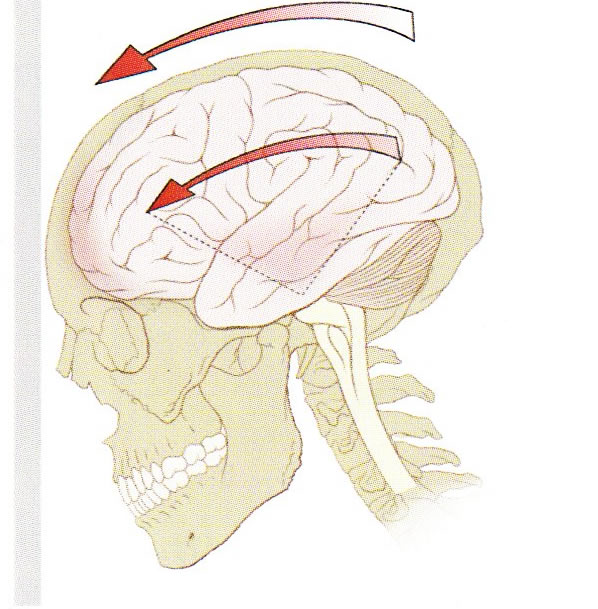
Concussion describes the brief loss of consciousness and memory, and dizziness that one may immediately suffer after an abrupt and violent head motion, such as a hit on the head. The traditional view is that once these symptoms have ended, an athlete is ready to return to regular play. However, there is growing concern that sending athletes back onto the field before their brains have fully healed may interfere with their recovery. The problem is that it is very hard to determine whether an athlete’s brain is injured after the symptoms of a concussion have disappeared.
In other words, “there is no gold standard for assessing recovery form a concussion,” Dr. Slobounov said.
Prior studies have used functional magnetic resonance imaging (fMRI) to examine whether there are long-lasting changes in brain activity after a concussion. However, the results have been inconsistent. This may be due to the fact that traditional fMRI measures changes in a small and localized fraction of overall brain activity that is only detectable when subjects are asked to perform a task and that may not be consistently affected by a concussion.
Dr. Slobounov and his colleagues used a brain imaging technique called resting state fMRI (rsfMRI) to compare the brain activity of athletes who were recovering from a concussion with that of control athletes who had no recent history of a concussion. As the name describes, rsfMRI is done while a person is at rest, which makes it possible to measure the brain’s overall level of activity. The researchers theorized that rsfMRI would allow them to look for larger, more consistent changes in brain activity after a concussion.
The study involved athletes who had experienced a concussion within the previous 10 days but had no residual symptoms. They performed as well as control athletes on neuropsychological and mild exercise tests commonly used to determine whether an athlete has recovered from a concussion.
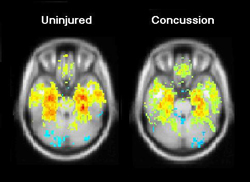
Nevertheless, rsfMRI brain scans revealed altered patterns of brain activity in the athletes who had suffered a concussion. Much of the activity representing the strength of connections between the left and right halves of the brain was lower, or weaker, than in the uninjured athletes. In contrast to the neuropsychological tests, these results suggested that the injured athletes had not fully healed ten days after the concussion.
When the researchers scanned the athletes’ brains a second time, immediately after administering mild exercise tests, they were surprised to find that the tests affected brain activity similarly in injured and uninjured athletes. The tests strengthened connections between the left and right halves of the brain in both groups. These results suggest that treating concussed athletes with certain mild exercises may need to be studied further.
The corpus callosum, the part of the brain that connects the left and right halves, is commonly affected by more severe traumatic brain injuries. Dr. Slobounov’s results strongly suggest that the corpus callosum may also be the primary site of injury after a concussion.
More importantly, these injuries may not heal until well after the symptoms have passed. These findings further suggest that rsfMRI may improve the assessment of concussed athletes.
Dr. Slobounov and his team received support from the National Institute of Neurological Disorders and Stroke.
– By Christopher G. Thomas, Ph.D.
Image caption: A comparison of brain scans taken from an uninjured and a recently concussed athlete reveals potentially harmful changes in brain activity caused by a concussion. The images were captured using a brain scanning technique called resting state functional magnetic resonance imaging (rsfMRI). Courtesy of Dr. Semyon Slobounov, Penn State University.
Reference: “Alteration of brain functional network at rest and in response to YMCA physical stress test in concussed athletes: RsFMRI study.” S.M. Slobounov, M. Gay, K. Zhang, B. Johnson, D. Pennell, W. Sebastianelli, S. Horovitz, M. Hallett. NeuroImage, April 15, 2011, Vol. 55(4), pp. 1716-27.
by Publisher | Apr 5, 2011 | Updates
BIAF’s new statewide public awareness initiative, “Mind Your Brain…Because it Matters,” raises public awareness about traumatic brain injury (TBI) and the need for more access and support of prevention, early intervention and treatment efforts.
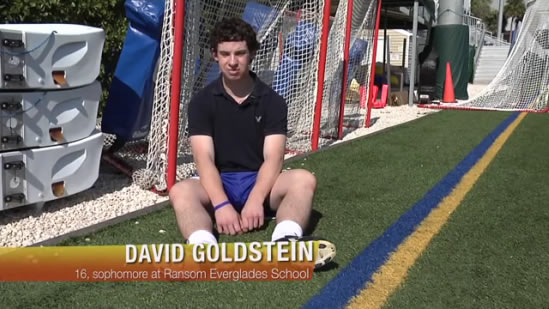
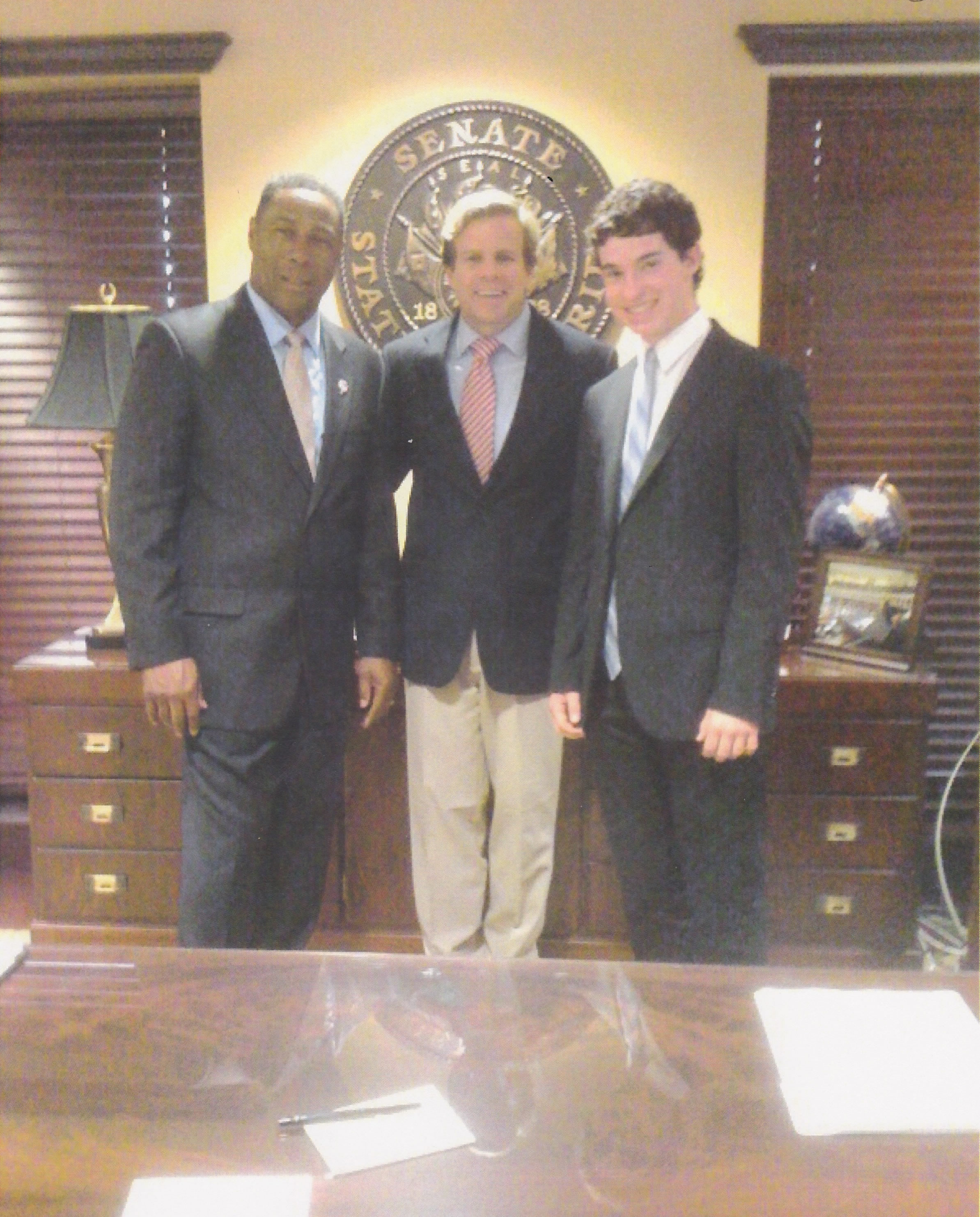
(From left to right in image: Nat Moore, Senator Haridopolos, David Goldstein)
Brainwaves – Mind your Brain